We can use artificial intelligence to understand large amounts of data and predict future patterns that help us make decisions to reduce our environmental impact.
Smart Energy Grids
A smart energy grid is a network that uses technology to monitor and manage the flow of electricity in a city. It balances the power supply fom renewable energy sources like wind and solar plants, and distributes it to meet power demand.
When the power supply is larger than demand, a smart energy grid can store power using batteries to be used in the future.
We use AI to predict some of the following energy grid questions:
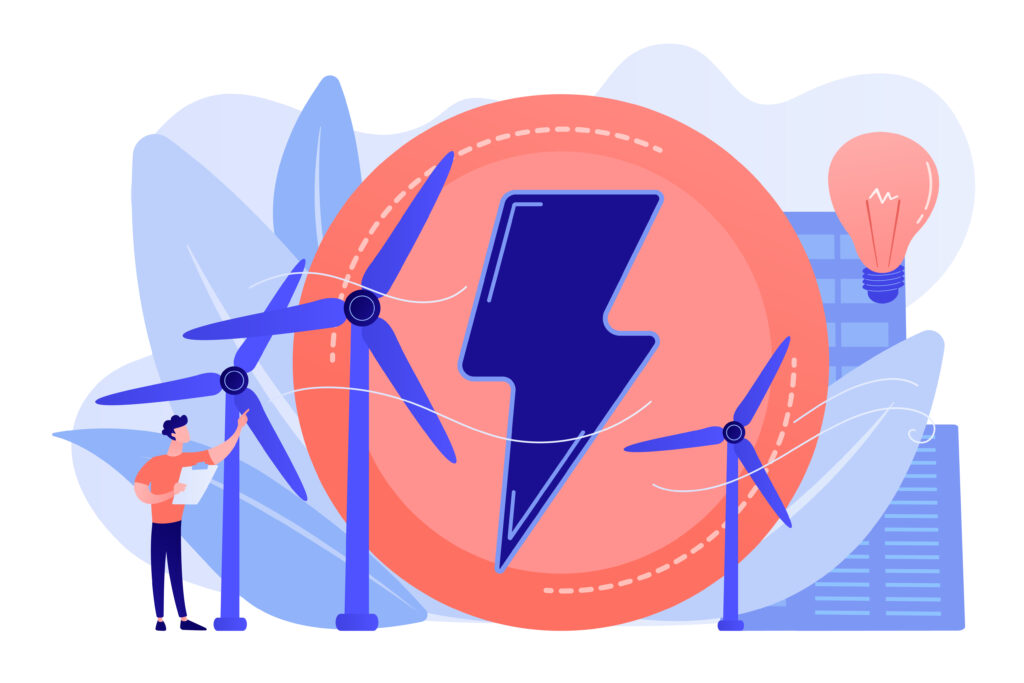
How much energy might be available in the future?
Based on weather patterns, we can predict when there may be more sun or wind, to predict how much renewable energy might be available in an area, and how much stored power we may need.
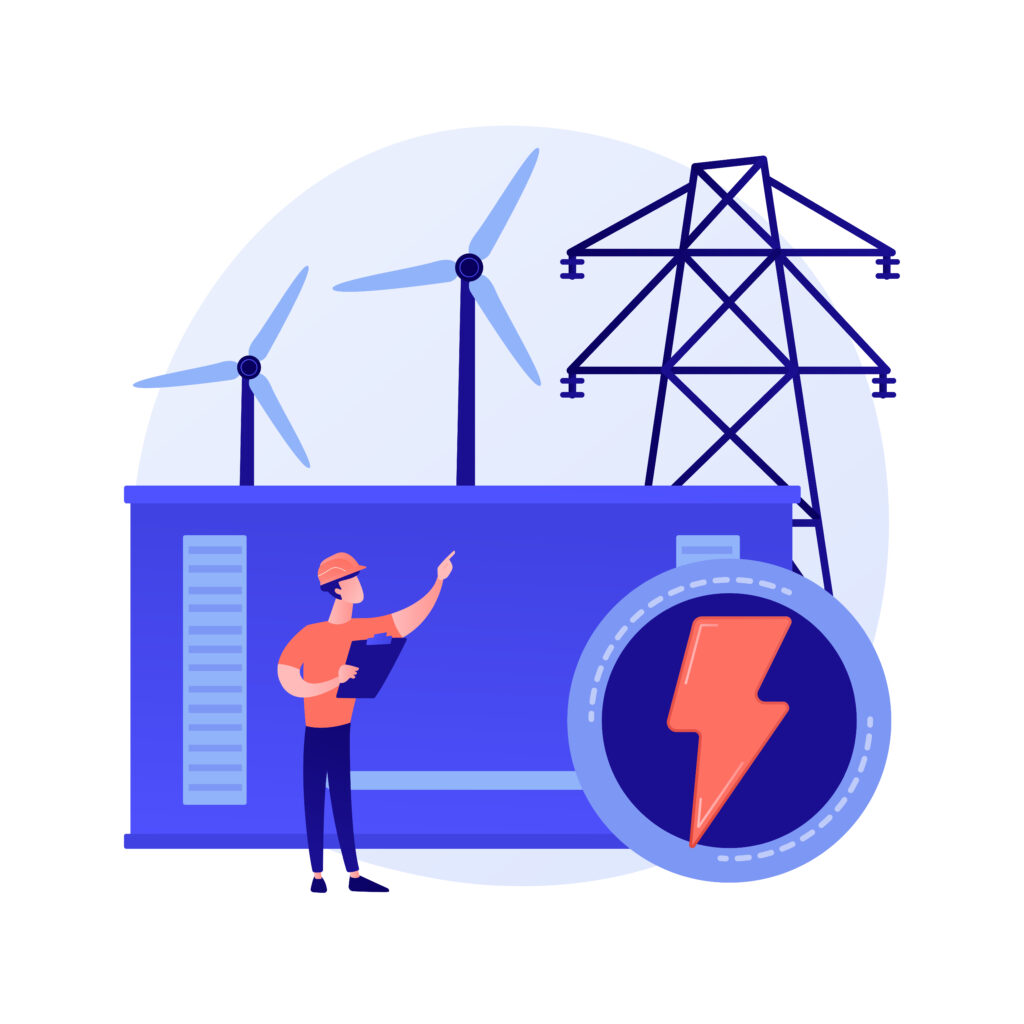
When will the demand for power be higher or lower?
Power demand is often lower when people are asleep, or when it’s not too hot or cold. If the power demand is low, we can store extra generated power in batteries!
Efficient Battery Charging
As batteries get older, the amount of energy they can store and transfer gets less efficient. When we leave a battery plugged in to a power source while it’s fully charged, or try to charge it too quickly, the battery ages faster and becomes less efficient.
We use AI to predict the answers to some of the following questions about batteries:
How long will the power be available?
If we reduce the amount of power flowing into a battery, we can take more time using less power to charge the battery to 100%. This helps keep the battery’s lifespan safe.
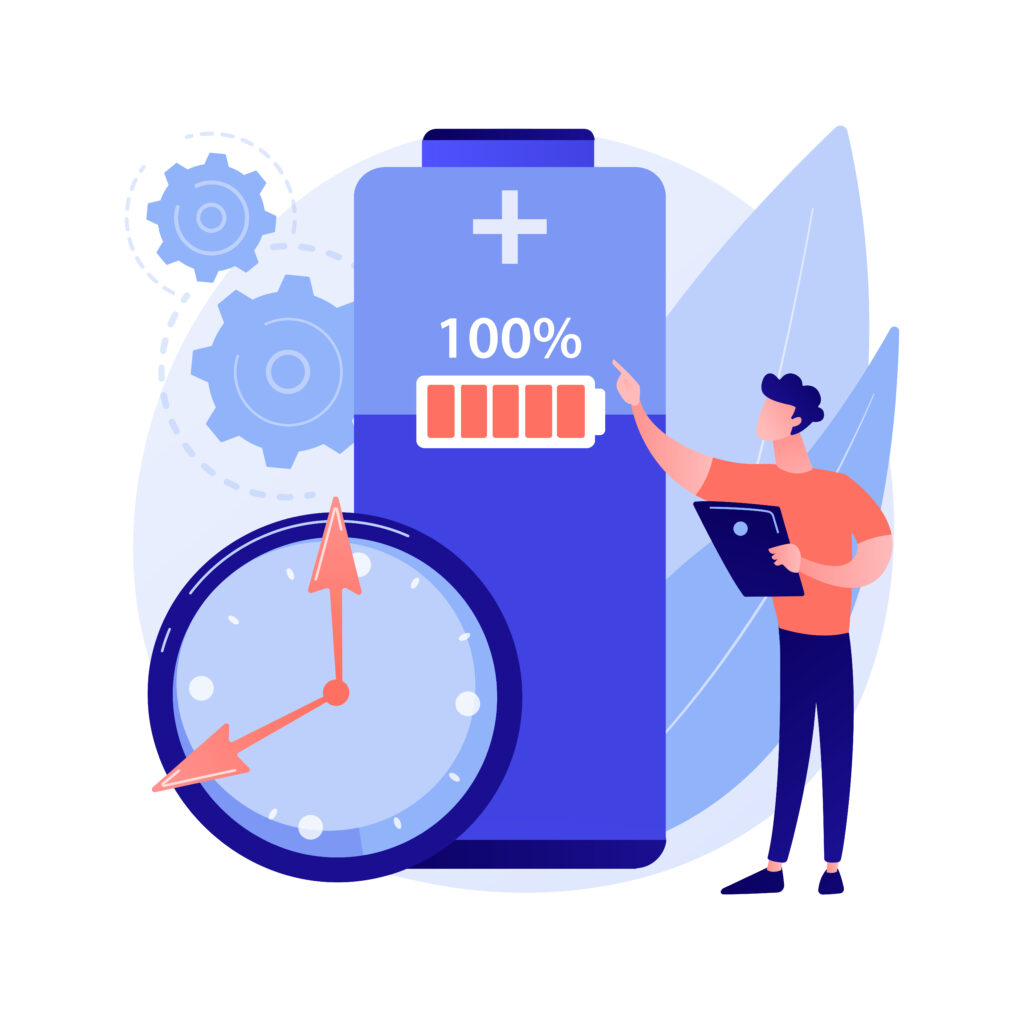
Is the battery fully charged?
Once the battery reaches 100%, we can disconnect it from the power supply, sending available power to other batteries in the grid until there is a demand for the power.